
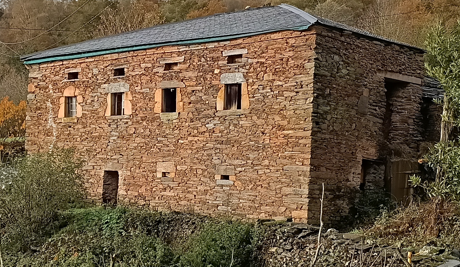





Work commitments prevented us from witnessing the most spectacular part of the project: covering the roof structure’s rafters with insulation boards that imitate tongue-and-groove wood on the inside.
The architect had told us that a new roof for a dwelling cannot be built with an insulation layer thinner than eight centimetres. The builder, however, did not want to use the traditional system — which consists of a layer of wood, another of insulation, and an asphalt membrane — because if the insulation was more than four centimetres thick, the battens (the strips that go directly beneath the tiles) would not fit firmly.
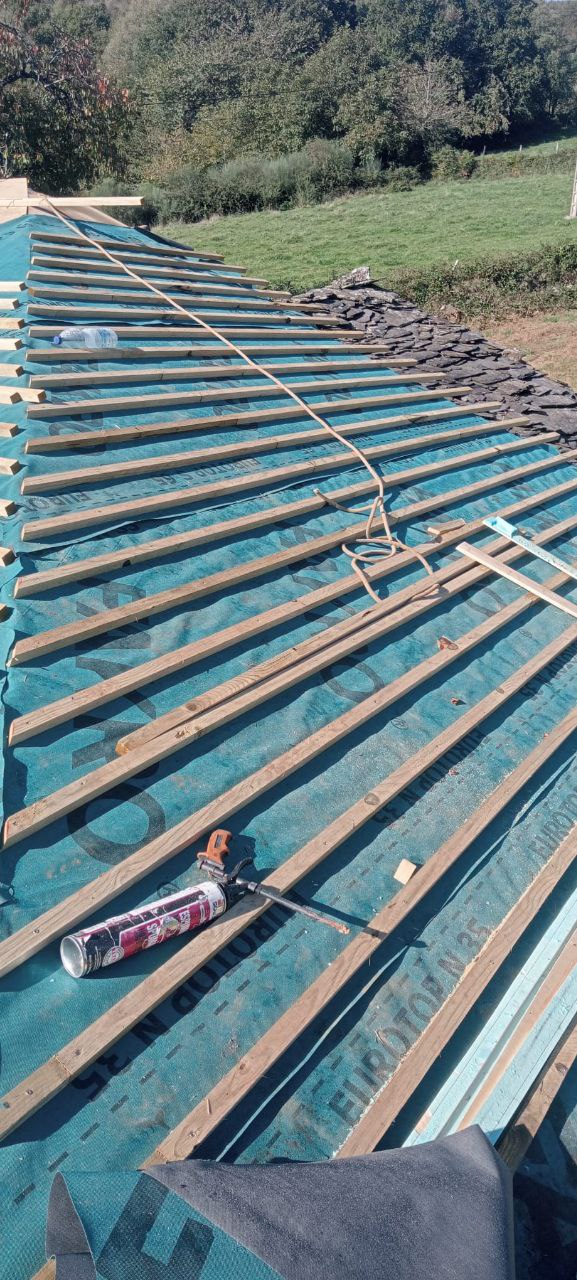
In reality, both were right. Slate tiles, like ceramic ones, are held in place by special hooks that are screwed to these wooden strips called battens. In most roofs, two different sets of battens are installed: first the vertical ones, which, as the name suggests, run parallel from the top of the roof to the bottom of each slope. On top of these, the horizontal battens are screwed, forming a grid. The tiles are then screwed onto the horizontal battens.
Double-batten roofs are good because they create an air chamber between the tiles and the inner covering, which dissipates heat on sunny days and evaporates moisture on cold ones. However, they are obviously more expensive.
Worried about the budget, what we asked for is what is known as a single batten system, which consists of screwing the horizontal battens directly onto the insulation and beneath the tiles. The builder pointed out that you cannot install a thick layer of insulation because the horizontal battens would move, causing tiles to come loose in strong winds. The architect, on the other hand, had us order 8 cm insulation thinking we had requested a double-batten roof, in which this problem would not occur because the horizontal battens would be firmly screwed onto the vertical ones, regardless of the thickness of the layer beneath.


The solution the builder gave us was to replace the insulation layer with a modern sandwich panel. These panels have a traditional tongue-and-groove wood imitation on the underside, an agglomerated wood board on the top, and a layer of polyurethane insulation in between — the same type as the white foam used in packaging. With these panels, the insulation could indeed be eight centimetres thick.
Apart from the increase in price, these panels are made to order, so we were not going to see them before installation on the trip we made. Nevertheless, they sent us photos of the process, which are the ones I’m showing here.
The part that worried me most about the solution we chose is that single-batten roofs tend to accumulate moisture when a tile fails, and the failure quickly becomes serious. The rotten wood of the batten that collects the water eventually gives way, causing more tiles to fail and spreading the problem to the next batten until the entire roof is ruined.
To reassure us, the builder sent a video in which he poured water from a bottle over the battens. They had fixed them on small protrusions to simulate the effect of the vertical battens, so the water flowed underneath them instead of pooling. It is a small consolation, but we know that the lifespan of this roof will be much shorter than that of a double-batten one. We hope it will at least last until the renovation is complete, in about six or seven years.