




Taking advantage of a family visit to Oviedo, we went to see how the project was progressing. They had barely begun to sketch out our first exchange of ideas, and both parties were aware that the initial sessions are where the working document undergoes the most changes. It is not easy to define everything we have in mind with words alone.
Starting from our clear brief, they had designed a layout that was not divided as we wanted, nor did it have the areas we had planned. That is normal. They took notes, proposed alternatives, ruled out solutions that regulations would not allow, and after scribbling over the original drawing, we arrived at something that closely resembles what we want.
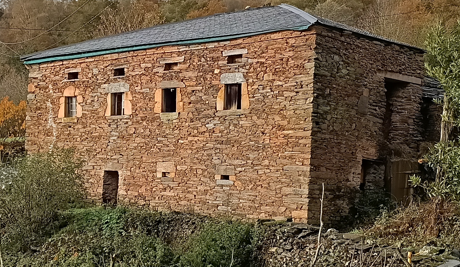
Basically, this new house will be the smaller part of the future dwelling, which is why we have made some rather curious decisions. The basic outline is as follows:
The almost 60 habitable square metres will be largely open-plan. In fact, there will only be partition walls to separate the rectangular bathroom in the northeast corner and a shaft for a future lift connecting to the basement. The other major division will be an American-style bar separating the kitchen and future exterior terrace from the current living room and future sitting and dining area.
The bathroom and lift shaft will be adjacent and will create a habitable space above them, which we will use as our provisional bedroom — although this will not appear as such in the official plans. The reason is that the College of Architects would not allow that area to be used as living space with the planned roof height without including a staircase, which would eat up a significant portion of the surface. Once we have the occupancy certificate, we will install a spiral metal staircase or similar. When the rest of the house is built, this will become a mezzanine whose final use has yet to be decided.
The entire north wall, except for the space occupied by the bathroom, will belong to the kitchen and will also have access to the terrace. The idea is that much of the light will enter the house from there. Since it will not open directly to the exterior, we can install a large glass wall that would not otherwise fit with the traditional architectural style of the area.
The southern part of the space will be the official bedroom according to the plans. In reality, that is where we will place the sofa, and in the southeast wall there will be the future connection to the unrehabilitated part. The architect had planned a large glass wall on the south façade, which we are going to change to a mid-height window with a fixed pane to maximise light without losing space. The entrance to the house will be through the current woodshed, in the southwest corner.
To prevent damp, we will install a drainage system on the west wall by removing the earth and filling with gravel that will drain into a channel. This will ensure we have no moisture problems despite the building being partially set into the slope. We will keep the existing west-facing window and the oven, which we will obviously restore.
Since our meeting on 18 February, enough time has passed for the architect to have made some progress. At the end of spring we will try to make a trip to the area to install the septic tank and, while we’re there, drop by the architect’s office to see if we can get a list of materials. That way we can start to get a realistic idea of what the builders will quote us.