



Dreaming is easy. It was to be expected that turning those dreams into reality would be far more difficult — especially in an unfair world where some barely have enough to eat, others die in senseless wars, and the rest look the other way, conspiring to hold on to the little they have.
In that context, setting up a second home more than 1,000 kilometres away from where we live, with the salaries we earn and the commitments we carry, was never going to be straightforward.
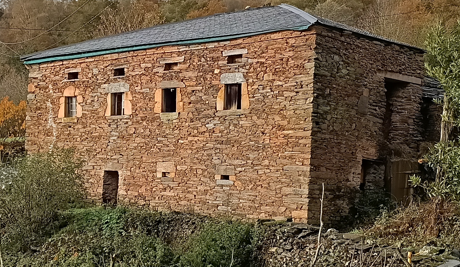
The first blow to my morale came the moment I saw the house in person. Not because it was in ruins — I already knew that — but because the reality was so different from everything I had imagined. I had believed we could make use of the existing structure and, with the help of a couple of builders, prepare part of it as a holiday refuge while we gradually invested our savings in renovating the main house.

In the smaller house — the one that was supposedly in better condition — absolutely nothing could be salvaged: not the roof, not the walls, not the floor. Nothing. It was in such a dire state that the only realistic solution was to demolish it entirely and build from scratch. As for the larger one, it was barely worth discussing.
We spent our first night there moving from one nightmare to another, wondering whether it might be wiser to walk away from the deposit we had already paid and look for another project later. But the ordeal wasn’t over yet; we still had to meet the notary to finalise the purchase.
The bureaucratic situation of the property was technically in order, though incomplete. We were so committed to the idea that we were willing to proceed if the seller provided all the guarantees we asked for and the notary gave his approval. But that wasn’t the case either.
The main obstacle was that the house formed part of a large inheritance consisting of numerous plots of land where the seller keeps cattle grazing. A cow cares little whether there are buildings, electricity, sewers or running water. Humans, however, are rather more demanding. We would have none of those basic services unless the seller first registered the house properly in the property records.
While this was a procedure we could theoretically handle ourselves, there was also the risk that the boundaries of our future plot were unclear with the neighbours — a problem we had no desire to inherit. The notary was so categorical in his advice that we decided to be cautious and postpone the purchase for as long as necessary.

To completely shatter what remained of our optimism, we ran into a problem we had anticipated, but whose importance we had underestimated: the house needed a proper system for wastewater. Until now, it had drained into a cesspit on the plot opposite, which belongs to the seller. He was willing to sign a contract allowing us indefinite use. However, current regulations no longer permit traditional cesspits; they require septic tanks — a cleaner and more ecological solution.
Installing a septic tank is relatively straightforward and affordable compared to normal building costs. But, as always, there was a “but”. The seller rents that plot to the person who will be our only neighbour — someone we might not necessarily get along with — and the location is awkward for emptying, as it would require a tractor and trailer that could end up crossing farmland.
He therefore suggested moving the installation to a spot beside the track in front of the house, so the tractor wouldn’t have to enter any sensitive areas. Everything was easy, everything was possible, and everything would be done after the purchase. That was the moment all our alarm bells started ringing. We insisted that the new system be installed before signing anything.
So now… we’re waiting for the seller.
On the subject of renovation, the same afternoon we arrived we had arranged to meet a local builder to show him the property. We barely needed to point it out; in these parts everyone knows everyone, and he already knew exactly which house it was before we even gave directions. He quoted us for a full restoration that would leave the house as good as new — at a price we simply couldn’t afford without going into lifelong debt. For him, only the full project made financial sense, not the phased approach we had in mind. The decision was easy to make. What truly shocked us were the scale of the figures he quoted — and that’s what triggered the nightmares.